
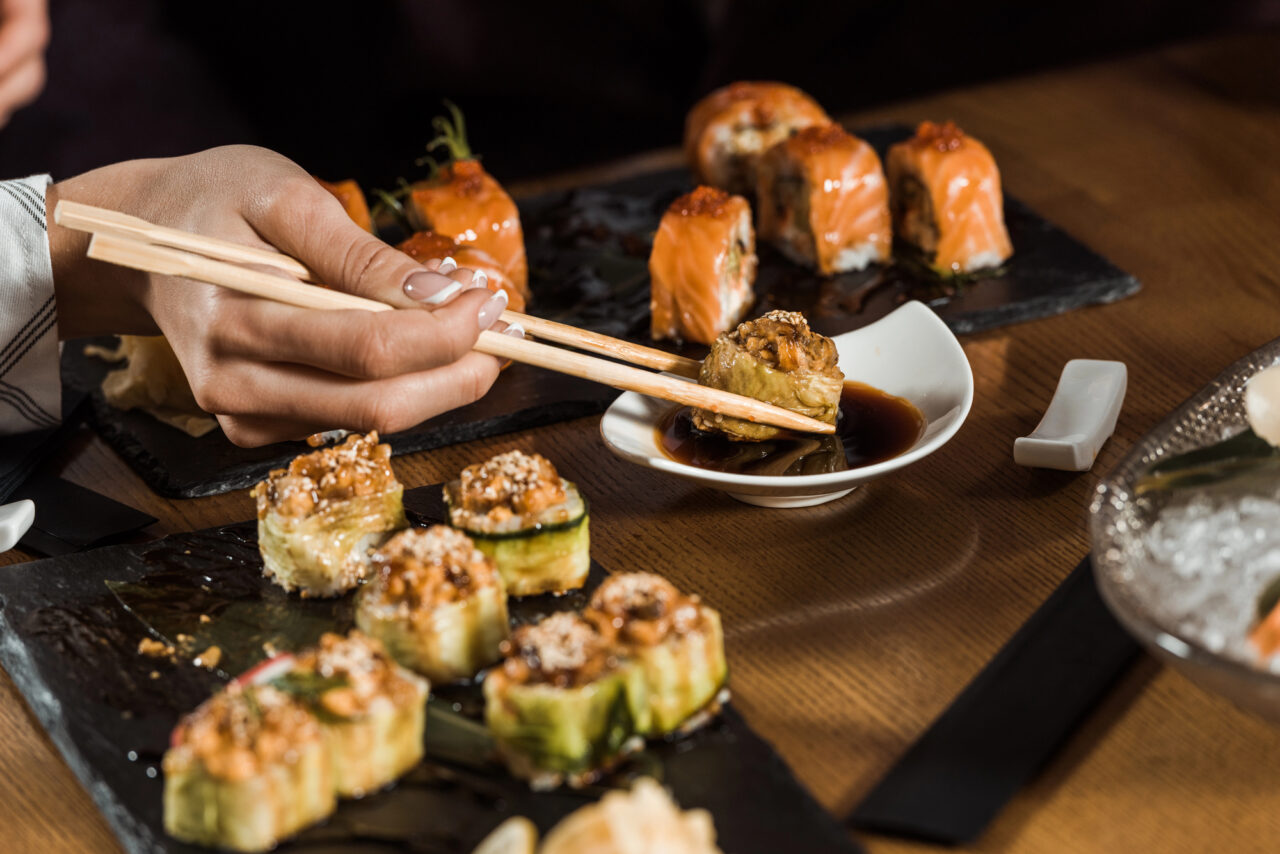
Sushi is one of those foods that seems simple on the surface — a few slices of raw fish, a little rice, maybe a dab of wasabi. But behind the minimalist presentation lies centuries of craftsmanship, culture, and culinary philosophy.
Whether you’re a sushi lover or someone who’s only ventured as far as a California roll, there’s always more to learn — and appreciate — about this iconic Japanese dish. Let’s break it down, piece by piece.
The Origins: From Preservation to Art Form
Sushi’s story starts not as a delicacy, but as a preservation method. In ancient Southeast Asia, people stored fish in fermented rice to keep it from spoiling — the rice was eventually discarded, and the fish eaten.
This technique made its way to Japan, where it evolved over time. By the Edo period (1600s–1800s), sushi had transformed into a fast food of sorts — served at street stalls and eaten quickly with the hands. The vinegared rice remained, but fermentation gave way to fresh preparation. And just like that, modern sushi was born.
Sushi ≠ Raw Fish
Let’s clear something up: sushi doesn’t mean raw fish. It refers to vinegared rice — su (vinegar) and shi (from meshi, meaning rice). The fish (or vegetables, or egg, or tofu) is the topping or filling, not the definition.
That means rolls, nigiri, sashimi (which is technically not sushi at all), hand rolls, and even vegetarian options all fall under the wide sushi umbrella — as long as that rice is involved.
The Power of Precision
A true sushi chef trains for years — not just in knife skills or ingredient sourcing, but in mastering the rice. Yes, the rice. Every grain must be perfectly cooked, seasoned, and shaped with just the right touch of pressure. Too loose and it falls apart. Too tight and it’s dense and dull.
Fish is sliced based on its texture and fat content, and even the placement of wasabi or garnishes follows tradition. It’s a dish built on restraint, balance, and precision.
Sushi Etiquette 101
Feeling unsure at the sushi bar? Here are a few tips that’ll make you look like a seasoned sushi-goer:
- Don’t drown your sushi in soy sauce — dip fish-side down, not the rice.
- Eat nigiri in one bite if you can (they’re designed that way).
- Use your hands — it’s totally acceptable.
- If served ginger, use it to cleanse your palate between bites — not to top your sushi.
Innovation Meets Tradition
While traditional sushi is all about clean flavors and craftsmanship, sushi has also become a canvas for creativity. In the U.S., rolls like the spicy tuna or dragon roll are American inventions. In Brazil, sushi bars fuse Japanese flavors with tropical ingredients. Around the world, chefs are honoring tradition while reimagining sushi in bold new ways.
And honestly? That blend of reverence and reinvention is kind of the point.
Slices of Simplicity, Layers of Meaning
Sushi is so much more than a trendy lunch or fancy dinner. It’s a culinary art form rooted in discipline, precision, and respect for ingredients. It tells a story with every bite — a story of balance, history, and quiet beauty.
So the next time you reach for a roll or order omakase, remember: sushi isn’t just food. It’s philosophy, served in edible form.

Kyle
Kyle is a long-time content writer with experience across a wide breadth of topics—including food and dietary wellness. Gluten- and lactose-sensitive, Kyle brings a unique perspective to writing about fast food, to help others with dietary restrictions better-navigate the menus of major fast food chains. His favorite fast food chain is Chipotle.
