
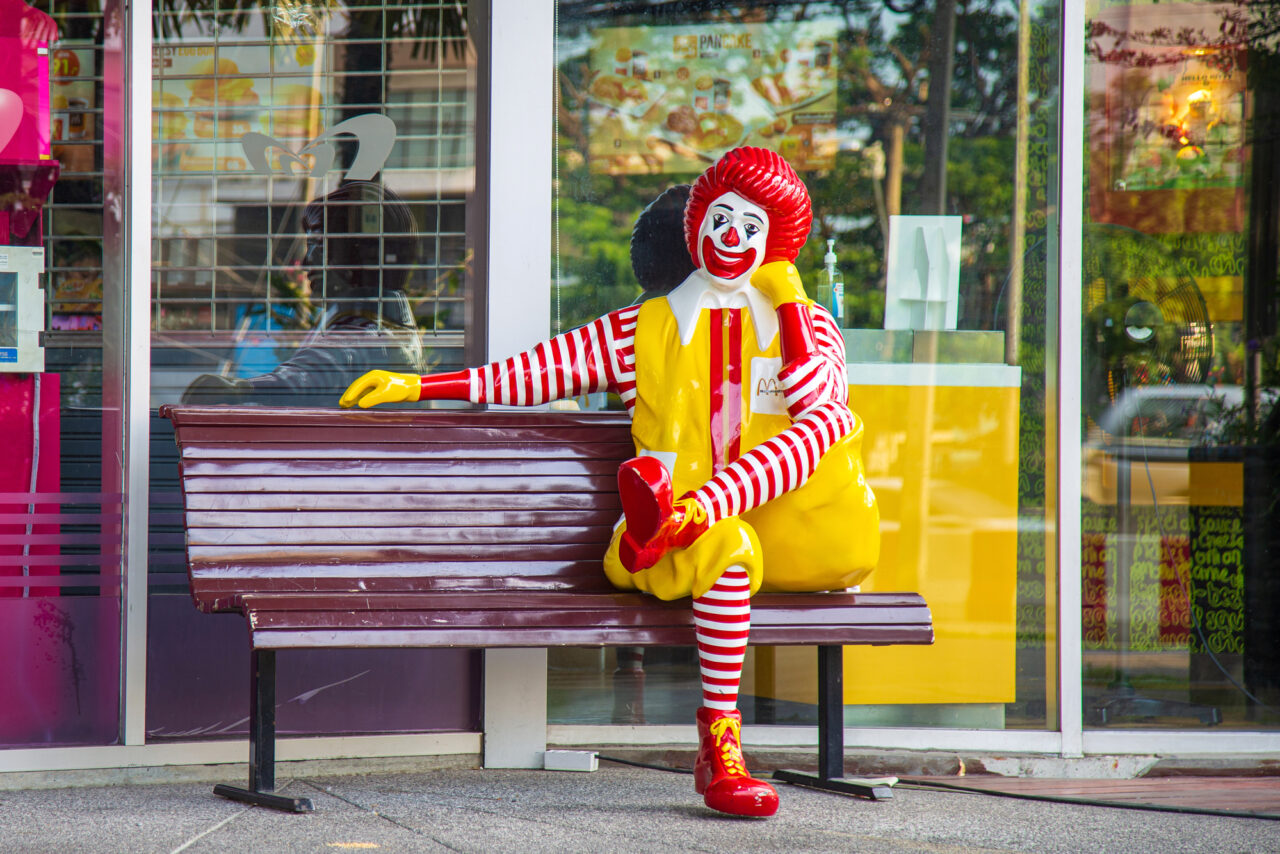
In the world of advertising and branding, few icons have achieved the level of recognition and cultural impact as Ronald McDonald. As the official mascot of McDonald’s, Ronald McDonald has become a marketing legend, captivating audiences around the globe. Join us as we explore the fascinating journey of Ronald McDonald and how this lovable clown transformed into an enduring symbol of the fast food industry.
From humble beginnings to global icon
Ronald McDonald made his debut in 1963, when McDonald’s commissioned a local Chicago TV personality and entertainer named Willard Scott to portray the character. Initially, Ronald McDonald appeared in television commercials and live appearances in the Chicago area, captivating children with his vibrant personality, bright red hair and distinctive yellow jumpsuit. The character’s charm and relatability quickly resonated with audiences, leading to his rapid rise in popularity.
Over the years, Ronald McDonald evolved and underwent various changes to keep up with the times while maintaining his timeless appeal. The character’s appearance was refined, with a redesigned costume, updated hairstyle and a more approachable demeanor. Ronald McDonald’s primary role shifted from being a clown to becoming a friendly, affable ambassador for the McDonald’s brand, embodying the values of joy, fun and togetherness.
Community engagement and philanthropy
One of the key factors behind Ronald McDonald’s enduring popularity is his involvement in community engagement and philanthropic initiatives. The character became the face of Ronald McDonald House Charities (RMHC), a nonprofit organization that provides support and resources to families with sick children. Through his association with RMHC, Ronald McDonald became synonymous with compassion and giving back, further solidifying his status as a beloved figure.
A marketing and branding icon
Ronald McDonald’s success as a marketing icon can be attributed to the carefully crafted branding strategy employed by McDonald’s. The character’s presence expanded beyond television commercials, appearing in print advertisements, on packaging and even in the design of McDonald’s restaurants, along with other characters such as the Hamburglar and Grimace. This comprehensive approach ensured that Ronald McDonald and his friends became deeply embedded in the public consciousness, fostering brand loyalty and recognition.
Send in the clown
Ronald McDonald’s journey from a local TV personality to a global marketing phenomenon is a testament to the power of effective branding and character development. The lovable clown has not only captured the hearts of children but has also become a cultural touchstone, representing the spirit of McDonald’s and its impact on popular culture. As we reflect on the rise of Ronald McDonald, we acknowledge the enduring legacy of this marketing legend.

Matt
Matthew has more than a decade traveling across the United States. He’s always on the road, writing about the history and culture of America. As a result, he’s also a well-traveled fast food connoisseur! From Southern chains like Bojangles to Northern classics like Culver’s, Matt has tried them all. His favorite fast food chain is In-n-Out Burger.
